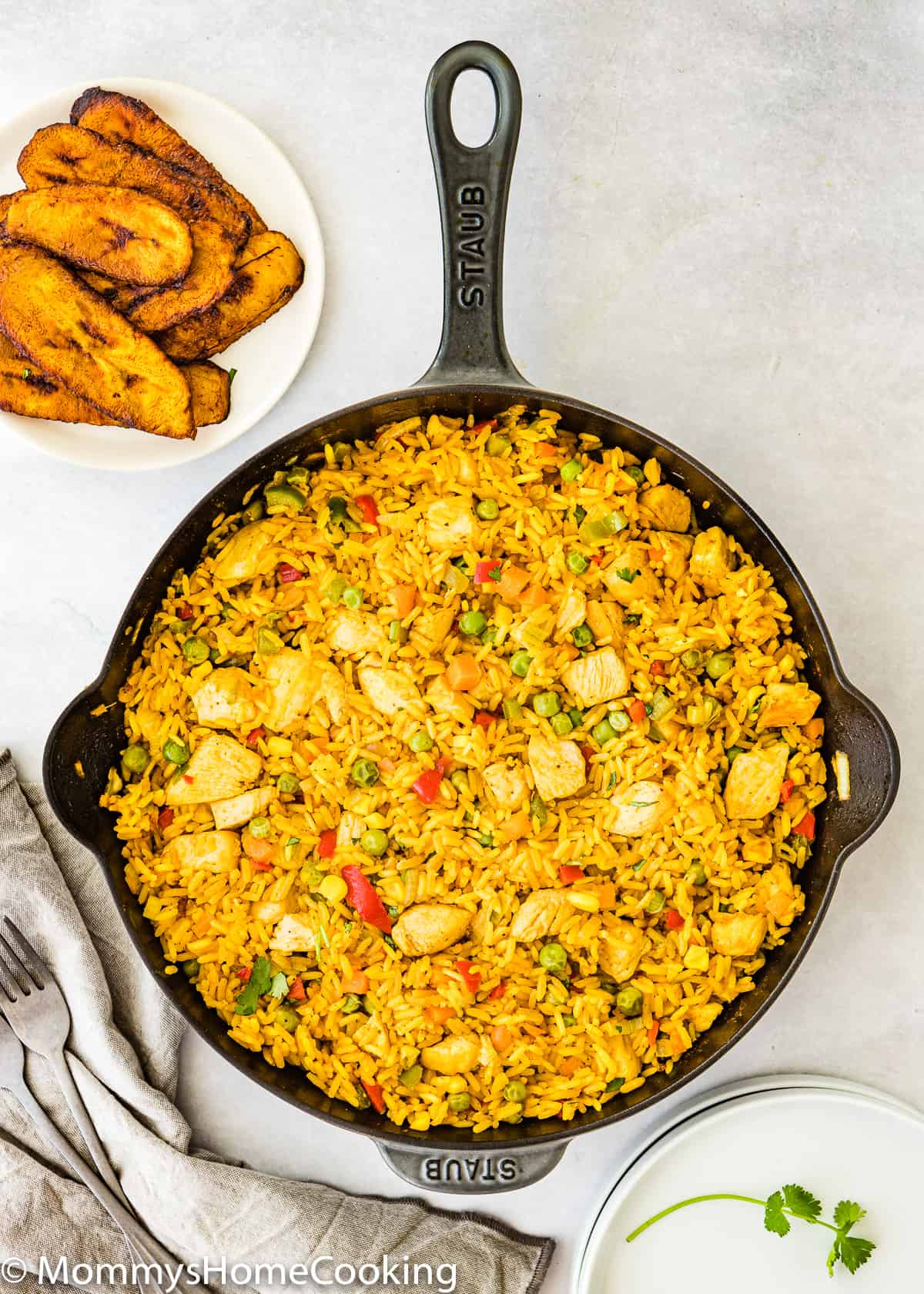
Spanish Chicken with Rice Arroz con Pollo: A Timeless One-Pot Culinary Journey
Few dishes evoke the warmth of home cooking and the richness of culinary history quite like Spanish Chicken with Rice, Arroz con Pollo. This beloved one-pot meal, literally translating to "rice with chicken," is more than just a simple combination of ingredients; it's a vibrant tapestry woven from centuries of diverse cultural influences, creating a dish that has traversed continents and adapted to countless palates. From its humble origins in Spain to its widespread adoption across Latin America, Arroz con Pollo remains a family-style staple, celebrated for its comforting flavors, aromatic spices, and remarkable versatility.
Whether you're seeking a hearty weeknight dinner or a centerpiece for a casual gathering, Arroz con Pollo delivers. Its simplicity belies a depth of flavor that comes from layering ingredients and allowing them to meld together in a single pan. The beauty of this dish lies not only in its taste but also in its adaptability, making it a perfect canvas for personal touches and regional variations. Let’s delve into the fascinating story and practical magic behind this iconic Spanish chicken with rice.
The Enduring Legacy of Arroz con Pollo: A Culinary Journey Through Time
To truly appreciate Arroz con Pollo, one must understand its deep historical roots, stretching back to Spain and beyond. While often associated with modern Spanish and Latin American cuisine, the dish's DNA carries traces of ancient trade routes and powerful cultural exchanges.
A Melting Pot of Influences
- Asian & Middle Eastern Origins: The journey of Arroz con Pollo begins with its core ingredients. Rice, a cornerstone of the dish, was introduced to Europe from Asia, making its way to Spain through trade. Similarly, chicken is thought to have arrived in Spain from India.
- Phoenician & Moorish Contributions: The ancient Phoenicians played a crucial role by introducing saffron to the Iberian Peninsula, imparting the rice its characteristic golden hue and distinct flavor. However, it was the Moorish invasion of southern Spain in the 8th century that truly cemented the foundational elements of this dish. The Moors brought not only essential spices like cumin but also advanced irrigation techniques, making large-scale rice cultivation possible. This agricultural revolution transformed rice into a staple of Spanish cuisine, paving the way for dishes like Arroz con Pollo and its close cousin, Paella. The Moorish culinary tradition of cooking savory dishes in a single pot, seasoned with a rich array of spices, is clearly evident in Arroz con Pollo.
The convergence of these influences around the 700s marked the birth of a dish that would resonate for centuries. Its one-pot, family-style presentation is a direct echo of those early culinary practices.
From Spain to the Americas: A New World Evolution
With the Spanish exploration and colonization of the New World, Arroz con Pollo migrated across the Atlantic, carrying its rich heritage to Central and South America. There, it didn't just survive; it thrived and evolved. Each Latin American country began to develop its own unique interpretations, incorporating local ingredients and culinary traditions. While the core concept of chicken and rice remained, regional variations emerged, reflecting the diverse agricultural landscapes and spice preferences of the Americas. This adaptability is part of what makes Arroz con Pollo such a living, breathing culinary tradition.
It’s also important to note its relationship with Paella. While both share Moorish seasoning influences and often the same cooking vessel, Paella traditionally features rabbit, duck, peas, and/or artichoke hearts, with seafood versions omitting meats for a bounty of ocean delights and often beans. Arroz con Pollo, however, maintains its focus squarely on chicken and rice, usually with simpler vegetable additions like peas and tomatoes.
Crafting the Perfect Spanish Chicken with Rice: Essential Ingredients & Techniques
The beauty of Spanish Chicken with Rice, Arroz con Pollo, lies in its simplicity and the depth of flavor achieved through a thoughtful, one-pot process. While recipes vary, the fundamental steps and ingredients provide a delicious foundation.
Core Components for an Authentic Taste
- Chicken: Bone-in, skin-on chicken thighs are often preferred for their rich flavor and ability to remain juicy during cooking. The skin, when seared, also adds a layer of delicious crispness and fat that infuses the rice. You can use other cuts, but thighs are a great starting point.
- Rice: Traditional recipes typically call for a medium-grain white rice, which absorbs flavors wonderfully without becoming overly sticky. However, for a healthier, higher-fiber option, brown rice can be used, though it will require a longer cooking time and potentially more liquid.
- Aromatics & Vegetables: Onions, garlic, and bell peppers form the aromatic base. Diced tomatoes, sometimes fire-roasted for an extra smoky depth, are crucial for both flavor and moisture. Green peas are a common and colorful finishing touch.
- Spices: This is where the dish truly shines. Saffron threads are the star, imparting a distinctive floral aroma and the signature yellow color. Cumin, paprika (especially smoked paprika for a richer flavor), salt, and black pepper are essential for a well-rounded spice profile.
- Liquid: High-quality chicken broth or stock is fundamental. It provides the liquid for the rice to cook in and distributes all the delicious flavors throughout the dish.
The One-Pot Method for Maximum Flavor
The brilliance of Arroz con Pollo is its one-pot construction, which allows flavors to build and meld seamlessly:
- Sear the Chicken: Begin by searing the seasoned chicken pieces until the skin is golden brown and crispy. This step creates a crucial layer of flavor (fond) at the bottom of the pan. Remove the chicken and set aside.
- Build the Flavor Base: In the same pan, sauté your onions, garlic, and peppers until softened. Add the diced tomatoes and cook them down slightly to concentrate their flavor. Stir in your dry spices – cumin, paprika, saffron – and allow them to toast lightly for a minute; this enhances their aromatic qualities.
- Add Rice and Liquid: Stir in the rice, coating it with the aromatic mixture. This light toasting helps prevent the rice from getting mushy. Then, pour in the chicken broth, ensuring all ingredients are combined.
- Simmer & Finish: Return the seared chicken to the pot, nestling it into the rice. Bring the liquid to a simmer, then reduce the heat, cover, and cook until the rice is tender and has absorbed most of the liquid. A key tip: avoid stirring the rice excessively once the liquid is added, as this can release starch and make it gummy. Let the steam do its work! Stir in the peas near the end of cooking or just before serving.
This process transforms simple ingredients into a complex, satisfying meal that's perfect for sharing family-style directly from the pot.
Beyond the Basic: Personalizing Your Arroz con Pollo
One of the most appealing aspects of Spanish Chicken with Rice, Arroz con Pollo, is its inherent flexibility. While a basic recipe provides a wonderful starting point, it truly shines when you adapt it to your preferences, dietary needs, or what you have on hand.
Smart Substitutions and Creative Enhancements
- Quick Weeknight Magic: For those busy evenings, skip the initial searing steps entirely by using shredded rotisserie chicken. Simply add it to the rice mixture during the simmering phase, allowing it to warm through and absorb the delicious flavors. This drastically cuts down on preparation time without sacrificing much taste.
- Healthier Choices: Opting for brown rice instead of white rice boosts the fiber content, offering a healthier profile for your digestive system. Just remember that brown rice typically requires more liquid and a longer cooking time (often 45-50 minutes compared to 20-25 for white rice), so adjust your recipe accordingly.
- Saffron Alternatives: Saffron, while iconic, can be expensive and sometimes hard to find. A fantastic substitute for color (though with a different flavor profile) is turmeric. A small pinch will give your rice a beautiful golden hue. In many Latin American variations, achiote (annatto) is used for its vibrant color and subtle, earthy flavor.
- Tomato Twists: If your family enjoys a bit of heat, swap regular diced tomatoes for a can of Rotel (diced tomatoes with green chilies). This introduces a lovely kick that complements the warm spices.
- Adding More Vegetables: Don't hesitate to toss in extra vegetables like sliced bell peppers (red, yellow, or green for a colorful medley), green beans, or even corn. These can be added along with the tomatoes or peas.
- Protein Power-Ups: While chicken is king, some regional variations in Latin America incorporate small pieces of pork, offering an even richer, meatier flavor profile. Chorizo, a Spanish cured sausage, is also an excellent addition, providing smoky, spicy notes.
The Rich Tapestry of Latin American Variations
The journey of Arroz con Pollo to the Americas led to a delightful explosion of regional styles. The most significant differentiator in many Latin American versions is the use of sofrito. This aromatic base, a mixture of finely diced herbs, spices, and vegetables, is foundational to many Latin American dishes. While the Spanish recipe often uses a basic sauté of onions, garlic, and tomatoes, Latin American sofritos are often more complex, typically including:
- Onions and Garlic: Universal essentials.
- Peppers: A variety of bell peppers or even spicier chilies.
- Tomatoes: Often fresh or canned, pureed or diced.
- Regional Seasonings: This is where the magic happens! Cilantro and oregano are very common, along with achiote (annatto) for vibrant color and a subtle peppery flavor. Some regions might add vinegar for a tangy brightness.
Each country, and even each family, has its treasured version, reflecting the local bounty and culinary heritage. Exploring these variations is a culinary adventure in itself!
For more in-depth exploration of regional differences or alternative preparations, you might enjoy our articles on Spanish Chicken with Rice Arroz con Pollo - Article 1 or Spanish Chicken with Rice Arroz con Pollo - Article 3.
Conclusion
Spanish Chicken with Rice, Arroz con Pollo, stands as a testament to the power of food to connect cultures and transcend time. From its ancient origins influenced by Moorish traders and Phoenician seafarers to its vibrant modern iterations across Spain and Latin America, this one-pot wonder offers a truly satisfying culinary experience. Its comforting aromas, rich flavors, and adaptability make it an ideal dish for any occasion – whether you're seeking a quick, flavorful weeknight meal or a celebratory dish to share with loved ones. Embrace the history, experiment with the flavors, and make this timeless classic a cherished part of your own family's culinary tradition.
